


Over the last few weeks, we’ve explored how perfectionism is often a survival strategy we use to feel safe. Speaking with psychotherapist Anette Kilefors confirmed that many of us share this experience: using high standards as a shield against judgment.
But perfectionism can be a strength if you change your relationship with it. It’s about moving from fear-based habits to the intentional choice of excellence.
So the next time you’re at work, and you feel yourself falling back into old habits, it’s okay. Approach it with curiosity, ask yourself these questions, and reflect.

5 Questions to turn perfectionism into strength:
1. Is this pressure to be perfect coming from someone else, or is it coming from me?
If it’s external, it usually comes from a manager or a client. Use your next 1:1 to align on expectations and clarify exactly what a successful outcome looks like for them.
If it’s internal: Remember that you are the one holding the pressure. You have the choice to turn it off.
2. What am I trying to achieve (or avoid) by being “perfect” right now?
Serving the project: Does this extra effort actually help the business or the final result?
Serving the ego: Are you trying to avoid the feeling of “not good enough”? Excellence focuses on doing a great job, while perfectionism is usually just a way to stay safe from judgment.
3. What is the worst thing that could happen if it were “great” instead of “perfect”?
The risk: Will a tiny typo cause a crisis? If not, it’s likely not worth the stress.
The trade-off: If the price of being “perfect” is burnout, chronic stress, or physical exhaustion, it is not sustainable for your career. Set a firm limit on how much time and energy you give to a single task.
4. Am I expecting everyone else to be perfect too?
The impact to culture: Perfectionism is contagious and often toxic. with perfectionism, you risk creating a culture revolved around “survival mode” that could make your team afraid of mistakes which lowers innovation .
5. Does perfecting the details bring me closer to my long-term career goals?
In short term: It’s easier to stay in “fixing mode” than to put yourself out there. Continuously revising things feels safe because as long as the work isn’t “finished,” it can’t be judged.
But in the long term: Real career growth is built on visibility and impact, not hidden polish. Don’t let a minor detail stop you from showing up, being heard, and moving forward.
From survival to leadership
We develop coping mechanisms to protect ourselves from psychological harm. But as we grow, these mechanisms need to be updated and sometimes unlearned. And this is what we’re trying to do together with Healing Out Loud.
Taking a career break has opened up a lot of space for me to question my previous conditioning: figuring out what to keep, what to improve, and what to let go of entirely. And I’m not here to judge the past, but to encourage myself in building space for new ways of growing and leading.
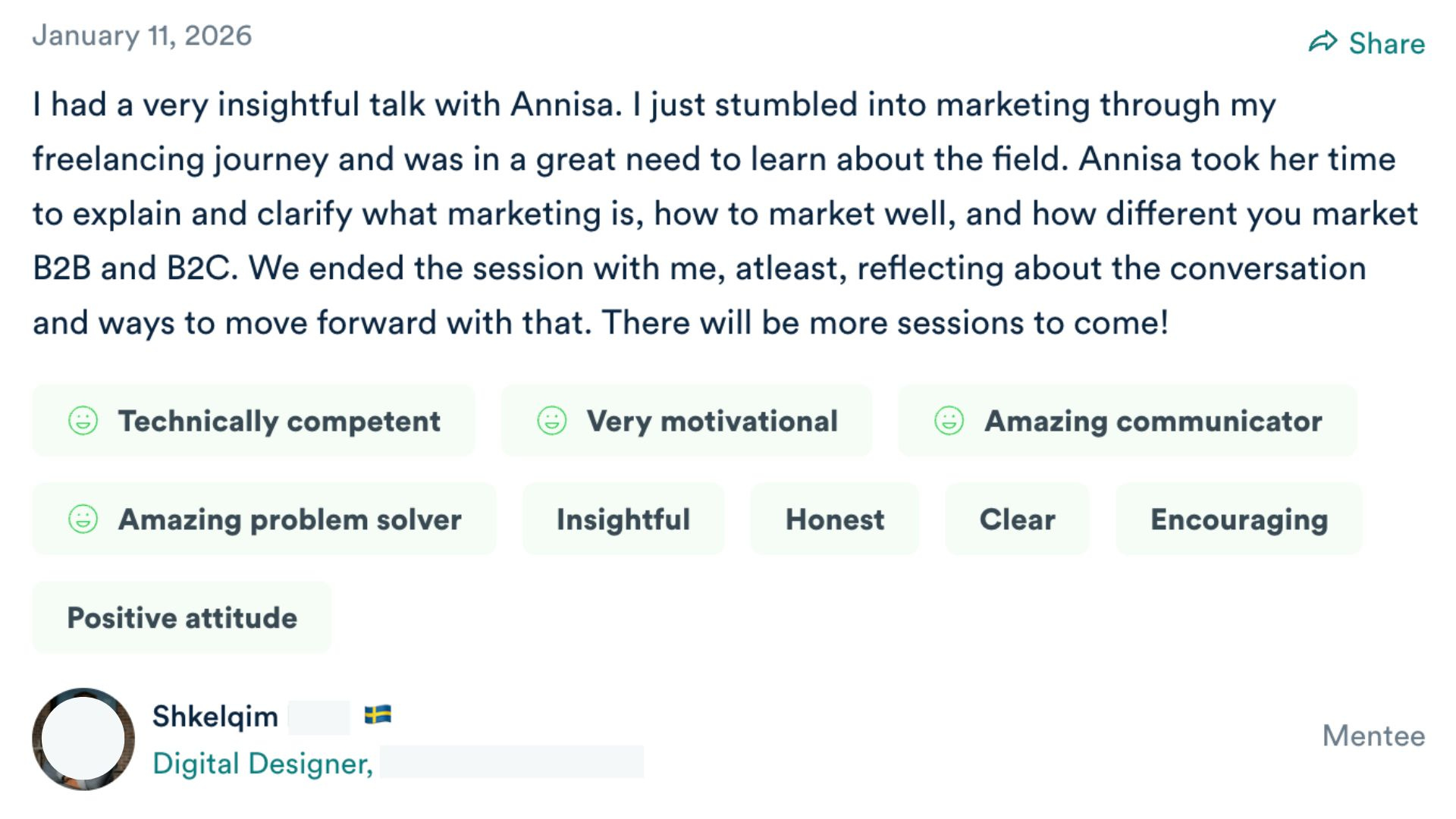
There is a special kind of growth that only happens when we help one another. And so part of this journey for me is through mentoring and consulting. If you’re navigating your own pivot or need a sounding board, you’re more than welcome to reach out. We can connect through ADPList at the link below. My schedule is always updated, and it’s pro bono for now.
What’s in February
Thank you for spending January with me unlearning perfectionism. Coming up in February, we’ll be discussing emotions in leadership. How do we lead when we are emotional? Does becoming a leader mean we should stop feeling? How do we use empathy as a strategy?
We’ll be joined by a special guest who journeyed from journalism to a VP role in tech before becoming a coach. Together, we’ll explore what it actually looks like to lead with empathy, learning how to navigate big emotions at work instead of hiding them behind a professional mask.
See you then.
Annisa 💙
As a perfectionist, this hit home. Especially the reminder that great is often enough.
The question of great vs perfect. Really great pause.