



Being a solopreneur, I always give 110% effort in every area of life. Being stressed over juggling 15 different things became something I was proud of.
Until it started giving me migraines every week and tense shoulders that won’t budge for anything.
Then l I met David Lally and learned what he calls the 7 Life Areas framework.
I have not felt that migraine since.
I loved this chat with Dave so much, I’m attaching the full focused conversation here if you prefer a podcast-like recording!
Dave is one of the great connections I’ve gained through Substack. An Irish expat living in Lisbon, he works as a life and career coach. I knew I needed guidance at that time because my unreasonable fear of doing sales was holding me back. We met for a virtual coffee, and he decided to take me on as a client.
To set the tone for our coaching sessions, Dave asked me to do an exercise where I audit my life across 7 key areas: what’s good, what’s meh, and what needs to be fixed.
This was where he introduced me to a new entrepreneur mindset I didn’t know I needed: by analyzing life through this framework, I can prioritize and adjust without guilt.
So you’re telling me I don’t need to do everything all at once and be overwhelmed every time? My overachiever self was both mind-blown and relieved.

What is the 7 Life Areas Framework?
Before we get into this, it’s very important to distinguish what it is and what it is not.
What it is not: A measure of internal emotional states. Instead, this framework is designed around outward engagement and activities. How we interact with the world, spend our focus, and/or allocate our energy.
What it is: A flexible structure, not rigid, not an instant fix. It worked so well for me because I get to define what each life area means for me. From there, it provides clarity and structure around what I choose to prioritize.
Headspace, not hours spent: This framework does not measure by hour spent on each area. Instead, it measures by headspace and desire for change. For example: a job might take 40 hours a week. But your primary headspace might be in health or family instead of career because you’d want to train for a marathon more than you want to work.
No self-judgement, please! This framework works best without expectations of perfection or self-criticism. In my experience, it operates like a weighing scale: it helps us understand which areas are demanding more energy right now so we can naturally prioritize them without feeling guilty about neglecting the others.
How this exercise helped me identify the mindset blocks holding my business back
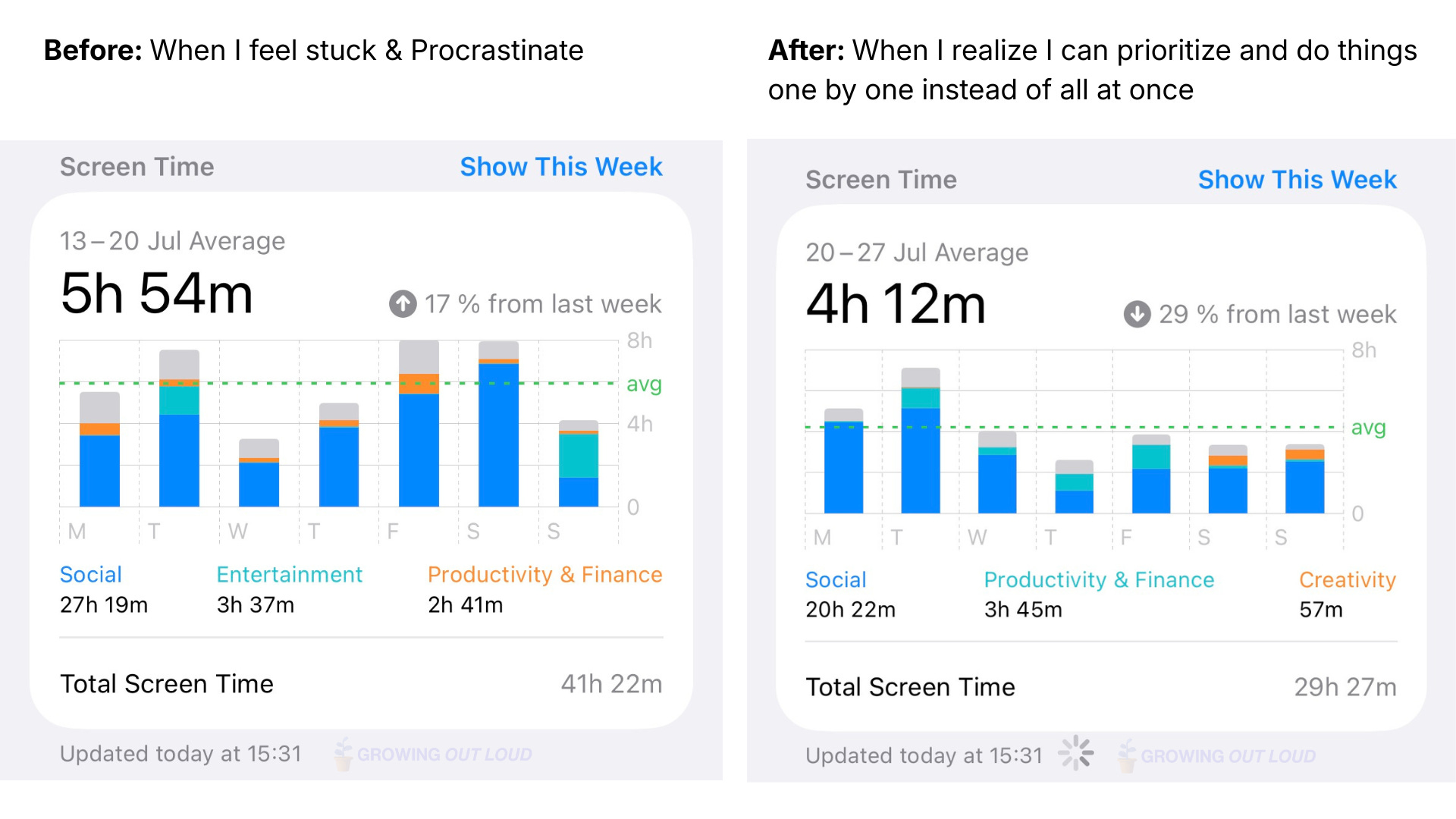
I used to think that my main problem was that I couldn't do sales. It made me feel embarrassed, caused me to avoid outreach, and led me to self-judgement. Whenever the sales anxiety hit, my default reaction was to doom-scroll.
What I didn’t realize at the time was that this was a classic subconscious pattern holding my business back. I was in a cycle of self-sabotage, avoiding outreach because of a mindset block I avoided for the longest time.
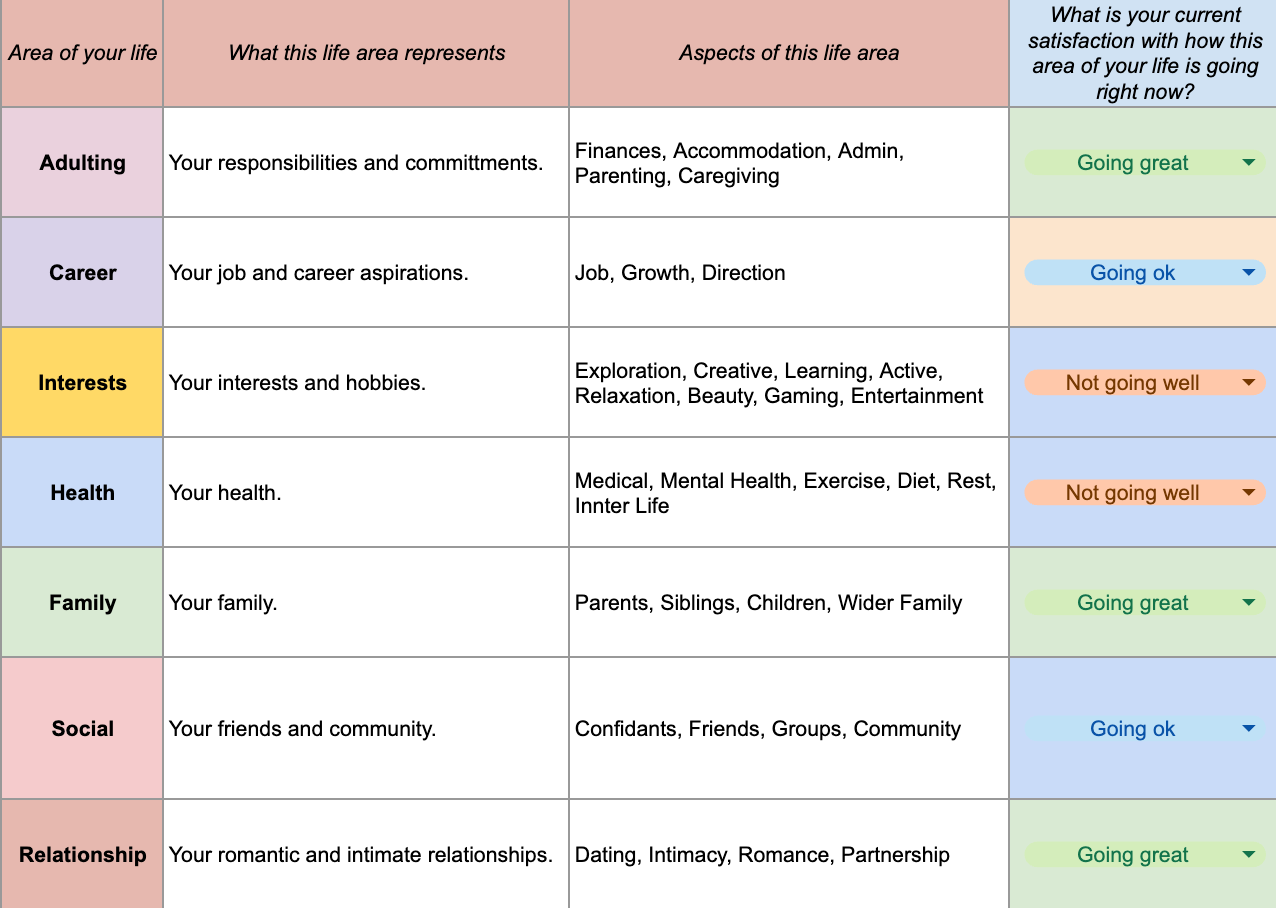
After doing the 7 Life Areas exercise and having my first few sessions with Dave, I realized that my problem was deeper than “not able to do sales.” My actual issue was that I couldn’t prioritize my services and structure how I grow my business. As a solopreneur, I was literally trying to do everything all at once, both personally and professionally. Of course I was overwhelmed!
Through this exercise, I finally understood that:
I can fine-tune my services and build what I like instead of what I think I should offer.
I can deprioritize some life areas, and prioritize others without feeling guilty.
I can actually do sales - I was just selling the wrong service menu.
And the result spoke for itself: I stopped procrastinating.
And best of all: I stopped having those migraines.
How to audit your life and overcome subconscious patterns at home?
There’s no single “right” way to do this exercise. Now that you know the framework, you can list the areas, grade them yourself, or discuss them with a confidant. Whichever feels authentic and safe for you.
Dave suggests simple journaling: grab a pen and paper, list the areas out, and map how you honestly feel about each one.
The most important key here is not to approach it with criticism or judgement. Because I did. And it sort of backfired a little bit.
I remember having our coaching session on a Monday. It took me until the weekend to actually make the time to look at the notes because it felt pretty heavy to me. Heavy because I was not ready to make room within myself to acknowledge that there were some areas of my life that I was not satisfied with.
But I braved it, swapped judgement for curiosity, and did it anyway. Afterward, it felt like a massive burden was lifted off my shoulders.
Taking action: shifting from overwhelm to growth
It doesn’t make sense to try to climb seven Mount Everests at once. It doesn’t even make sense to try to climb one overnight! The great thing about this exercise is that once you have a clear picture, you can break your goals down to make them less intimidating.
Following what Dave suggested, here was my exact thought process and action plan:
Now I know I don’t fear sales; I was overwhelmed > Fix the overwhelm by fixing my business strategy > Fix my business strategy by deleting services I don’t want to do > Review this new service list menu, do I feel good? > Yes! > Now let’s finalize the business website and start putting ourselves out there!
And just a couple of weeks ago, I finally did it: I published my website and put myself out there.

Believe it or not, since then I’ve had four sales calls without me sweating through my shirt once. I was so proud of this growth in mindset that my husband took me to a nice dinner to celebrate.
Why an entrepreneur mindset is essential for sustainable growth
As I continue my solopreneur journey, I’ve come to believe that we are often our own biggest saboteurs. Developing a resilient entrepreneur mindset is just as crucial as developing your business strategy. Without addressing why we self-sabotage our own success, even the bestest business plans will stall.

Borrowing what Dave said: [success] means so different from one person to another. For me right now, success is the ability to hold these new mindsets and maintain a sense of curiosity.
Having only known corporate before starting this solopreneur journey, I was used to following instructions, tracking KPIs, and relying on systems built by others.
But I can’t do that anymore. As a solopreneur, I am the system, and I have to build that from the ground up through time and experience. And if I don’t have a healthy mental foundation to begin with, I won’t grow a healthy business.
So friends of Substack, this is not a sponsored post nor is it commissioned. But I am genuinely having a great time working with David Lally on my growth. If you’re a solopreneur or are someone interested in working on your life or career, and want to try out the 7 Life Areas framework for free, do so from the link below.
The journey is yours!
To growth 💙
Annisa
The seven-area frame helps because entrepreneurial overload is rarely business-only; sleep, relationships, and identity spill into decisions. Sequencing one constraint at a time beats a self-improvement pile-on. I’m subscribed; keep up the work, Annisa.