


In the workplace, we’re often told to leave our emotions at the door. However, I’ve learned the hard way that when you repress your emotions, they grow into bitterness, resentment, and eventually, a toxic atmosphere.
So what can actually happen when managers, as leaders, ignore their emotions?

Experience A: The “disciplined” manager
I once worked with a manager who publicly scolded their employees. This manager believed that professional discipline required suppressing empathy and vulnerability to get things done. However, by ignoring the underlying stress and frustration, the manager was prone to explosive outbursts. I remember a Teams call with 24 people where this manager screamed at an individual over a small mistake. That person resigned weeks after that incident.
This has been the culture since I joined the company. Little to no guidance was provided, yet demands for specific outcomes were high. And for those who fell short, public scolding awaited.
The Impact: The team was paralyzed by fear. When making mistakes leads to public shaming, we stop taking risks. We stop voicing concerns, repress our own emotions, and communication dies. Eventually, talents resign to escape the obnoxious aggression.
Experience B: The “cool” manager
In another role, I worked with a leader who was the opposite. They played the part of the "cool" manager who appeared grounded, and was the "nice" manager who accepted everyone and tolerated everything.
However, clear boundaries and honest critiques were lacking. The internal pressure on this leader heightened quietly until they simply "had enough." Eventually, a minor issue triggered a full-blown outburst during a private meeting. It was so intense, the yelling was heard clearly behind the closed doors. The persona this manager had built collapsed.
The Impact: The jarring switch-up from ‘cool’ to ‘explosive’ made the team anxious, which trapped them in groupthink to avoid future outbursts. The unpredictability caused us to doubt the manager’s sincerity, and the instability stalled our momentum.
What helped me understand these experiences
I realized both leaders struggled with the same thing: the inability to balance their personal affects for the team with the need for honest, direct feedback.
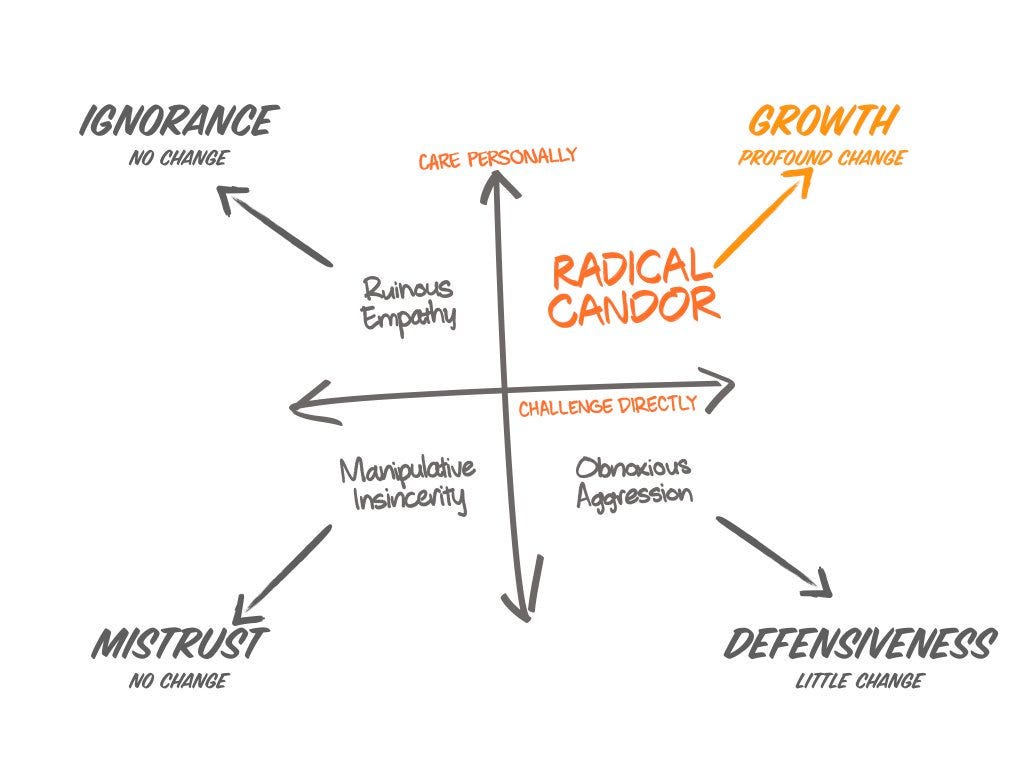
From reading Kim Scott’s book, Radical Candor, I changed how I looked at these dynamics. Her framework helped me put names to the patterns I saw.
When I looked at the two experiences through the lens of what I learned:
Experience A was a textbook case of Obnoxious Aggression. It was all about “challenging directly” but with zero “personal care.” It created a culture of defensiveness.
Experience B was what Scott calls Ruinous Empathy and happens when the manager is “too nice” to share the truth to avoid discomfort. While it feels like they’re protecting feelings, they actually prevent the other person from growing.
What I now look for in a leader
Looking back at the two experiences, the most important thing is to stay true to our own emotions. Not put up a persona of a “tough” boss or “nice” leader. Instead, provide candid feedback and conversations accordingly. Based on my own growth, here is what I’ve learned to value in leadership:
Clarity over ego: Prioritizing guidance and a roadmap over exercising authority.
Kindness over niceness: Choosing clear, direct feedback over vague or insincere praise.
Emotional consistency: Understanding your own feelings for a more steady reactions, rather than hiding behind a disingenuous persona or losing temper.
When a leader is clear, kind, and consistent, the team stops second-guessing the leader’s moves and starts doing their best work. When these values are properly exercised, teams feel safe enough to take risks and grow together. Honesty helps the manager to be a better leader, and helps the team stay productive.
Final thoughts
Emotions are not the problem in the workplace, it's the mismanagement of them.

Having been on both sides, whether with the manager as the yeller or the repressor, the result is the same: a team too nervous to perform. By practicing Radical Candor, we can move past "surviving" the office and actually create an environment where real and genuine growth is possible. Something I think everyone would benefit from.
Thanks for sharing. I’ll forward this to my clients