


“What if I’m not good enough?”
In my years of mentoring students and consulting for leaders, I’ve realized this critical voice is ever-present. We try to be perfect for everyone, thinking that if we just achieve enough, our inner critic will finally go quiet. But what we don’t realize is that perfectionism isn’t always about high standards, it is often a survival reflex stemming from our past.

To understand what, why, and how to unlearn, I sat down with Anette Kilefors. She’s a psychotherapist based in Sweden with over 20 years of experience helping individuals, couples, and families navigate the challenges of being a human.
Healthy vs. Maladaptive Perfectionism
Not all perfectionism is bad. It drives us toward our goals and higher standards of excellence. However, there is a fine line between it being a tool for growth or a burden that holds back said growth. According to Anette, the difference lies in our relationship with rest.
Healthy perfectionism feels like a choice. You can decide when you want to lean into it and direct it toward the areas of your life that matter. You enjoy the process, and while you want to do well, your identity isn’t crushed if you fall short.
Maladaptive perfectionism feels like a necessity. You use it like a shield. You can’t take it off without feeling a sense of guilt. Because you aren’t working toward a goal, you’re running away from the feeling of inadequacy.
“We believe that high performance equals stability,” Anette explained. “But frequently, that drive is actually a maladaptive coping mechanism. We keep moving because we’re afraid that if we stop, we’ll have to face the quiet fear that we aren’t enough just as we are.”
Why do we feel the need to be perfect?
When I asked Anette if she had ever felt this pressure herself, her answer was immediate. “Of course! Growing up in an anxious environment, I felt the pressure to be high-functioning, to always be perfect.”
Driven by her mother’s projections, Anette maintained a “polished exterior” in a career she wasn’t passionate about, to avoid disappointment. Eventually, the pressure of impossible standards led to burnout and a long sick leave. It was through this crisis that she found her true path in psychology and helped turn her breakdown into a breakthrough.

Like my own experience with my tiger mother, our upbringing highlights the “why” behind maladaptive perfectionism. It’s not caused just by the desire for quality. Instead, it is usually a complex mix of environmental, psychological, and even genetic factors, often rooted in childhood.
But let’s pause here for a second and realize: this isn’t anyone’s fault. It isn’t our fault, and it isn’t our parents’ fault, either. We are all simply doing the best we can with the tools and the understanding we were given at the time.
The spiral of growth: unlearning perfectionism
It takes years to undo the aftermath of perfectionism. Burnout and anxiety take time to heal. Anette told me something that brought me comfort:
“You have to work on yourself your whole life because there is no ‘finished’ version of you.”
She continued, “and as you develop and understand yourself better, you build a resilience that allows life’s inevitable sorrows to touch you without breaking you.”
Anette reminds us that even when we spend all our energy trying to be perfect to avoid trouble, a crisis is still inevitable. And according to her, these moments are not setbacks; they are what move us forward in the larger picture.
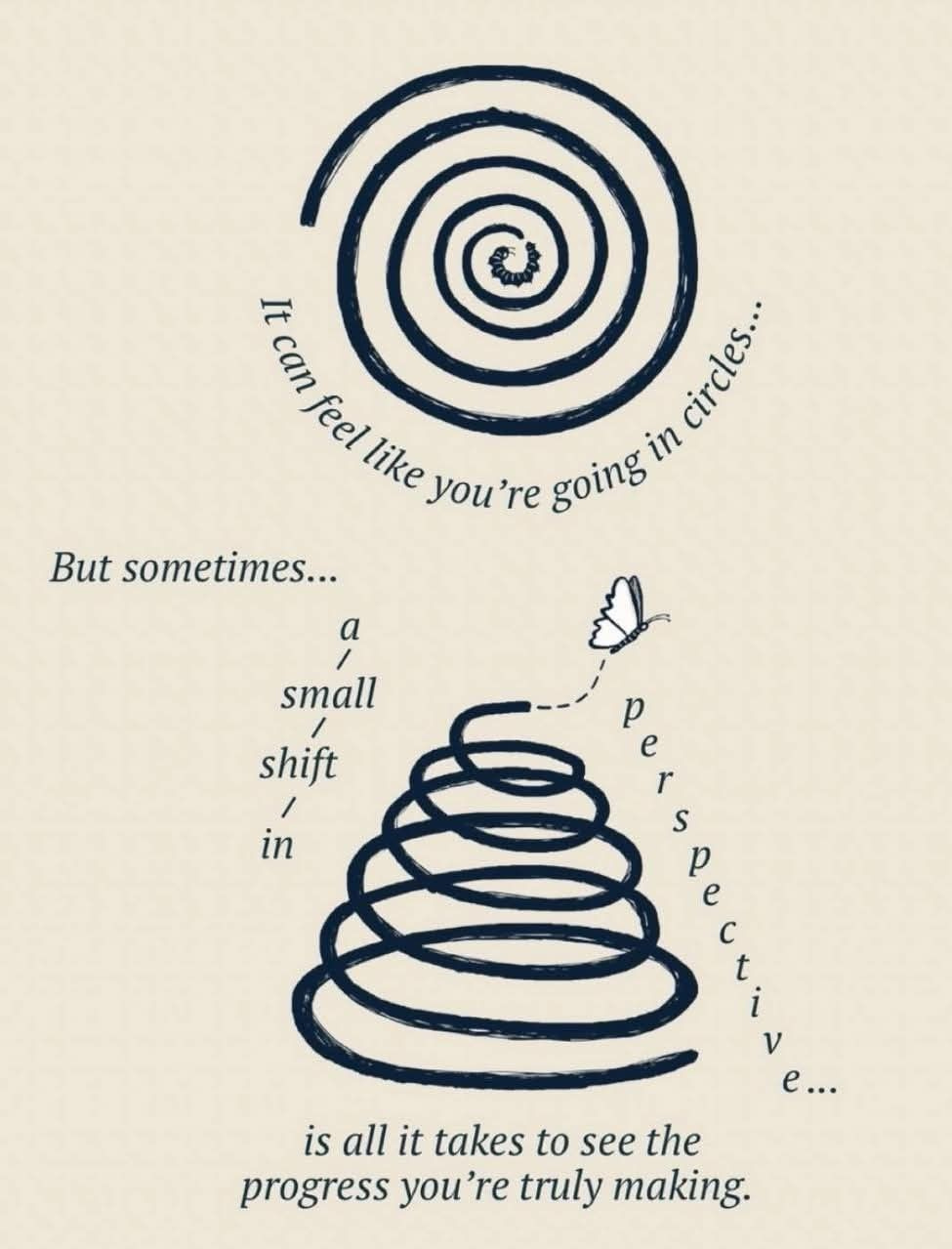
“Sometimes you feel like you’re back in the same dark place you were a year ago,” she says. “You think, ‘I’m stuck. I haven’t learned anything.’ But often you aren’t stuck. You’ve just come around the curve of the spiral. You’re at the same point, but you’re one level higher. You see the problem with more clarity now. You have more and better tools.”
Tools to help us move forward
Before finishing, I asked Anette for tools to help us through this journey of unlearning the need to be perfect. Here are some of the few she shared:
Silence the critic with self-compassion: Perfectionism is expressed by a harsh inner voice that demands impossible results. She advises us to talk to ourselves the same way we do to a friend. If a friend was exhausted, we wouldn’t demand them to push even more. We should give ourselves the same compassion.
Somatic Release of the “Perfect” Mask: We can’t think our way out of the tension caused by trying to hold everything together. Use deep “stomach breaths” or a walk in nature to release the physical grip of perfectionism and tell the body it is safe to relax.
Journaling: Use notes to track growth, not just goals. Looking back at entries from years ago allows us to see the progress we’ve made within the spiral. It helps us realize that while you aren’t “perfect,” you have certainly grown.
As we closed the talk, Anette reminded me that every time we choose compassion over perfection, we are moving the spiral upward. “You are worthy of a calm life, even while you are still a work in progress,” she said.
Anette Kilefors is a licensed psychotherapist based in Helsingborg, Sweden. You can find more of her work and insights at psykoterapihelsingborg.se.
This was an excellent read. I've never heard this explained quite like this and it was very timely for me personally - thank you!
I can relate SO hard to this. Restacking.